Multisystemic Therapy Infographics and Fact Sheets

Quick, visual snapshots that show how evidence-based services support youth, families, and communities.

Child Welfare & Juvenile Justice Infographics

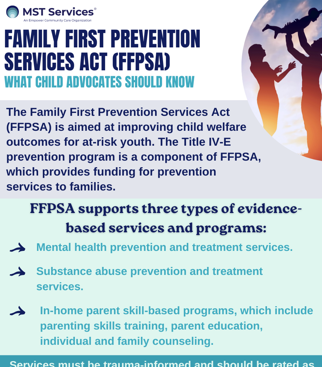
Family First Prevention Services Act (FFPSA): What Child Advocates Should Know

The Family First Prevention Services Act (FFPSA) is a crucial piece of legislation aimed at improving child welfare outcomes for at-risk youth. Our infographic provides key information about FFPSA prevention services, Title IV-E funding and its intersection with Medicaid, as well as other important requirements for improving child welfare outcomes.
View

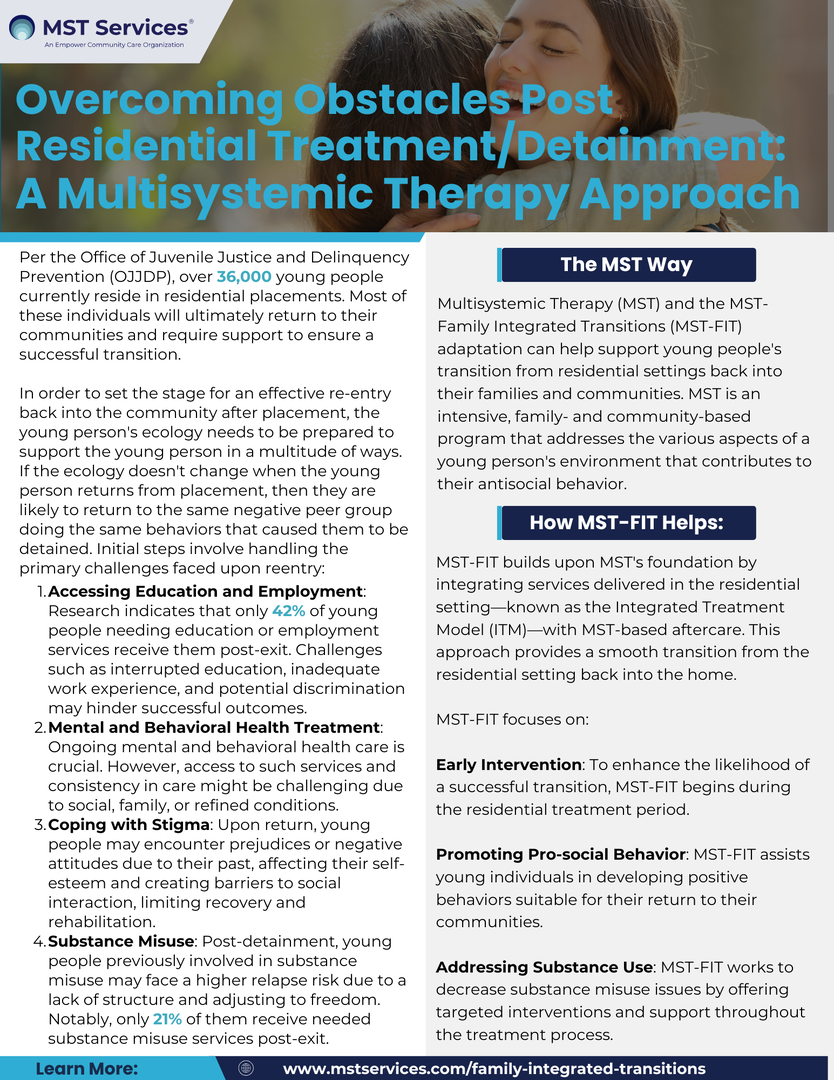
Overcoming Obstacles Post Residential Treatment/Detainment

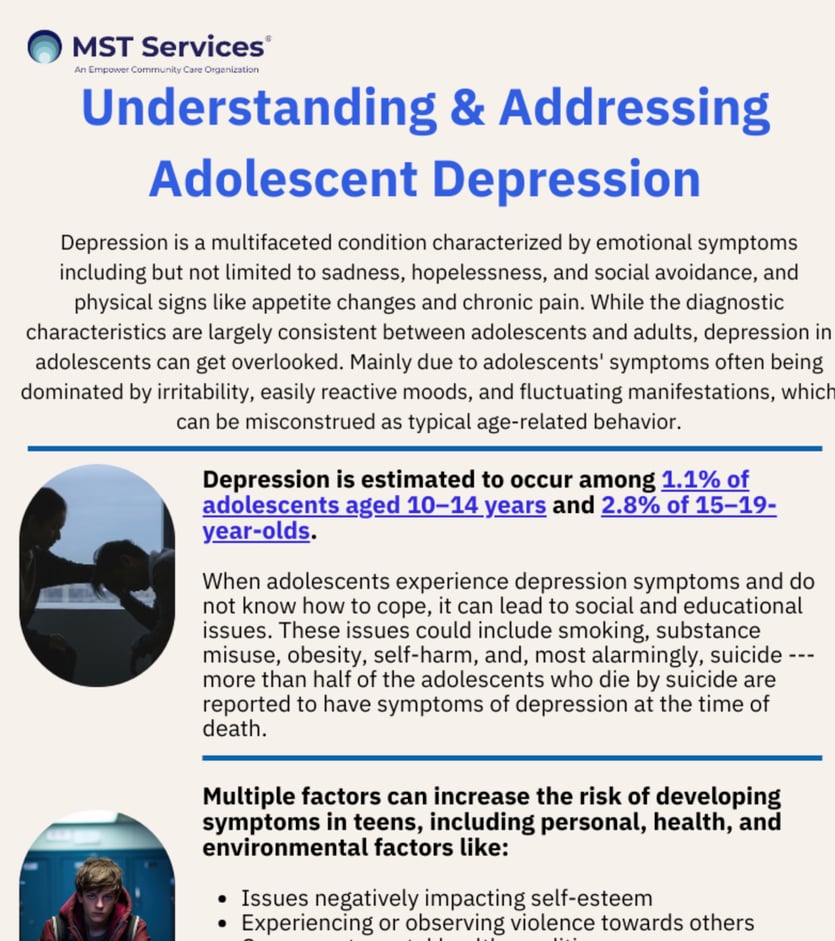
Adolescent depression significantly impacts the lives of young individuals, their families, and communities. Our infographic aims to dissect the array of challenges tied to this critical mental health concern while shedding light on the unique experiences of affected adolescents.
View

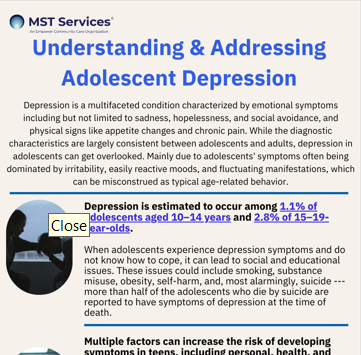
MST and Adolescent Depression

Adolescent depression significantly impacts the lives of young individuals, their families, and communities. Our infographic aims to dissect the array of challenges tied to this critical mental health concern while shedding light on the unique experiences of affected adolescents.
View

Homelessness and Housing Instability Among LGBTQ Youth

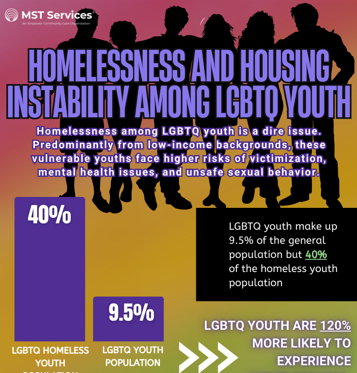
The consequences of elevated homelessness and housing instability risk among LGBTQ+ youth in the United States have critical impacts on their mental health. This infographic sheds light on the critical challenges and unique experiences of homeless LGBTQ+ youth.
View

Sustaining Your MST Program

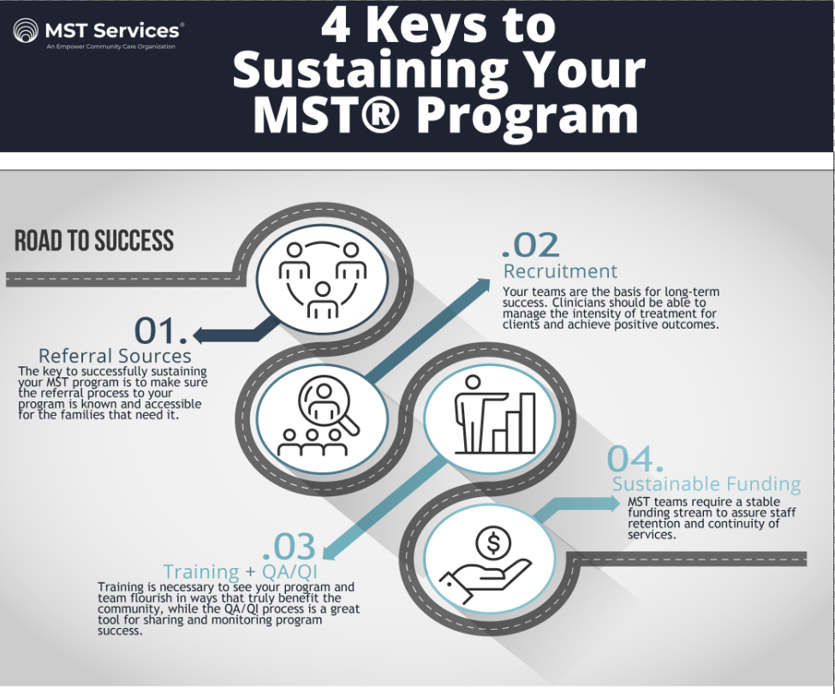
Looking for tips on how to expand your MST Program? This infographic covers the four main focus areas to ensure your program's long-term success.
View

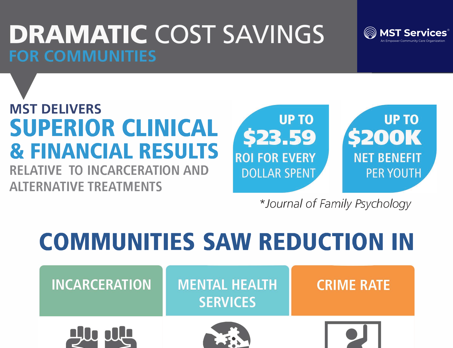
Dramatic Cost Savings for Communities

This juvenile justice infographic shows the different ways in which MST helps families and communities by reducing crime, empowering families and saving tax dollars.
View

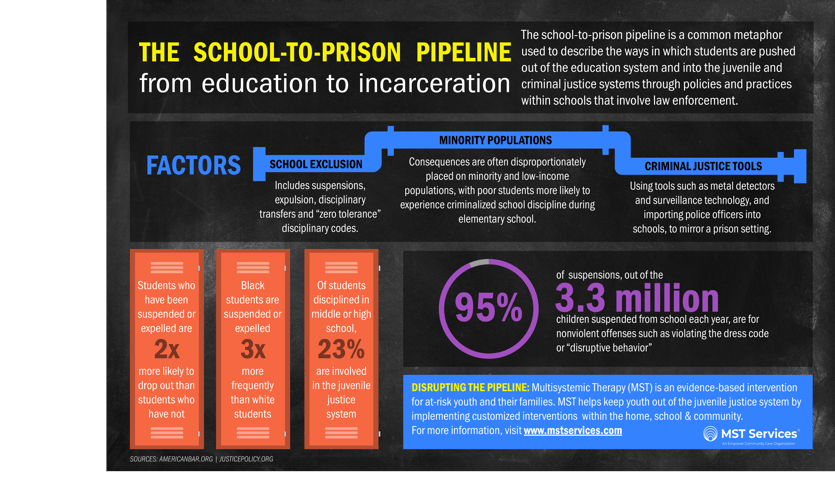
From Education to Incarceration

The school-to-prison pipeline is a common metaphor used to describe the ways in which students are pushed out of the education system and into the juvenile and criminal justice systems through policies and practices within schools that involve law enforcement.
View

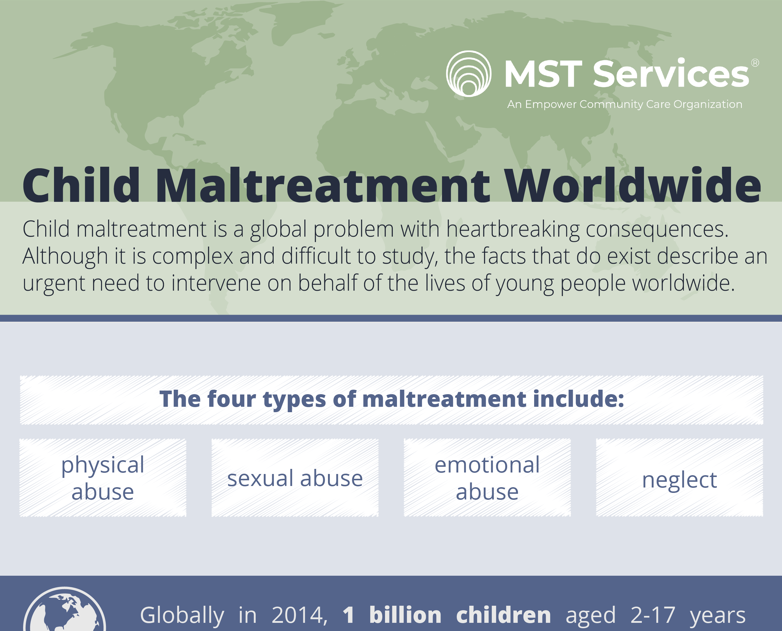
Child Abuse and Neglect Worldwide

Child abuse and neglect is a global problem with heartbreaking consequences. Although it is complex and difficult to study, the facts that do exist describe an urgent need to intervene on behalf of the lives of young people worldwide.
View

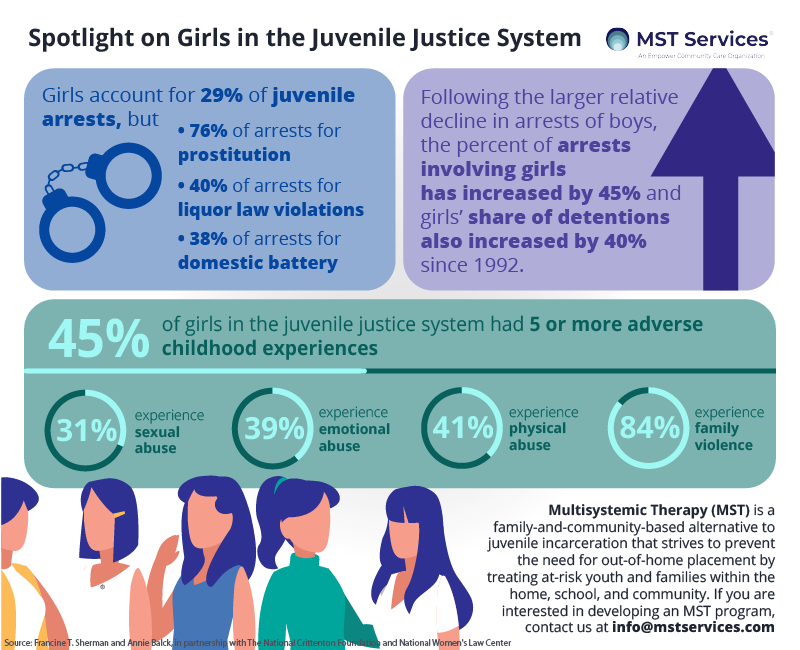
Spotlight on Girls in the Juvenile Justice System

Following the larger relative decline in arrests of boys, the percent of arrests involving girls has increased since the 1990s. Research has revealed the various adversities many girls face as well as their unique responses to trauma that place them at risk for entering the system.
View

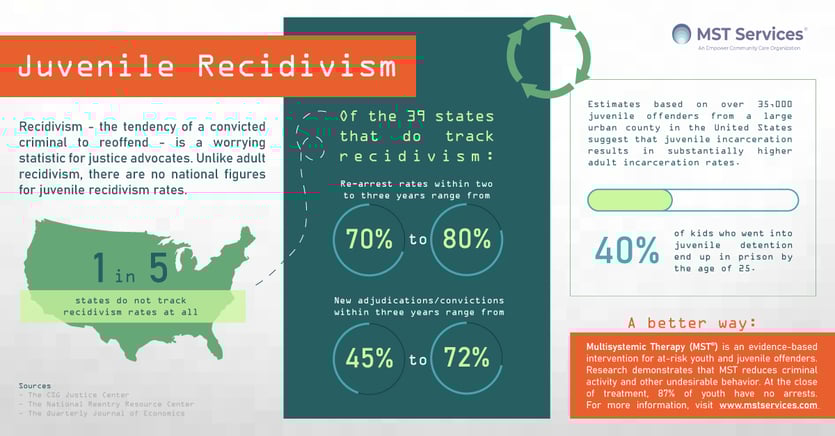
Juvenile Recidivism

Imagine spending thousands of dollars to lock up a juvenile, only to have them end up in the same position in the future. Recidivism - the tendency of a convicted criminal to reoffend - is a worrying statistic for justice advocates.
View

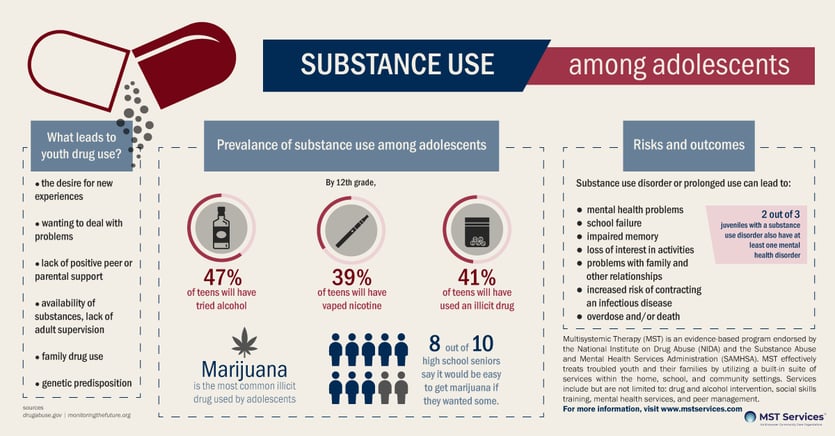
Teen Drug Use

Teen drug use is a concern for many. Teens are often inclined to take risks, and by 12th grade, nearly 50% of adolescents will have used an illicit drug. Check out this infographic to understand some of the risks and statistics of teen drug use.
View

Fact Sheets and Flyers

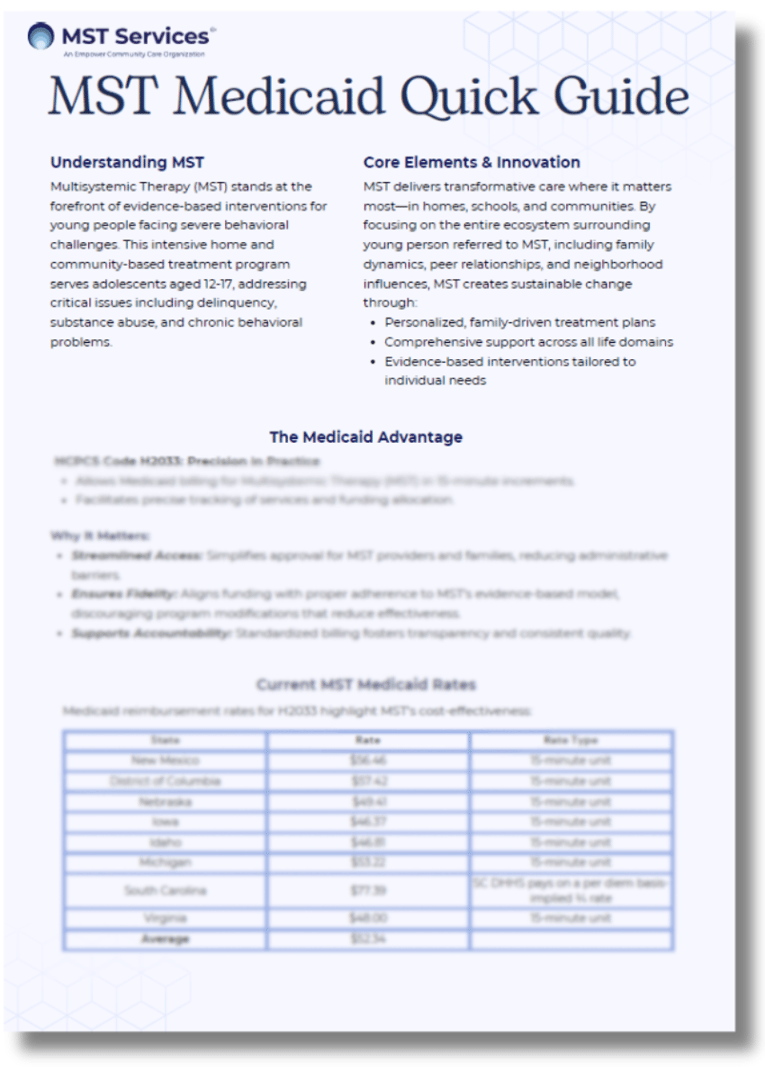
MST Medicaid Quick Guide

Explore Medicaid funding for MST, its benefits, rates, and New Mexico’s success using the program.
View

MST Overview

An introduction to MST and how we provide proven results for families and communities.
View

Multisystemic Therapy - Psychiatric

The Multisystemic Therapy- Psychiatric (MST-Psych) adaptation is an evidence-based intervention specifically designed to serve families with youth at risk of out of home placement due to serious psychiatric and behavioral problems.
View

Multisystemic Therapy for Child Abuse and Neglect

The Multisystemic Therapy for Child Abuse and Neglect (MST-CAN) adaptation is an evidence-based intervention for families with children at risk of foster care placement due to child abuse and/or neglect.
View

Multisystemic Therapy - Building Stronger Families

The Multisystemic Therapy - Building Stronger Families (MST-BSF) adaptation is an evidence-based program for families who come under the guidance of Child Protection due to abuse and/or neglect plus parental substance abuse.
View

Multisystemic Therapy - Intellectual Disabilities

The Multisystemic Therapy - Intellectual Disabilities (MST-ID) adaptation is an evidence-based program for youth and/or caregivers with a known or suspected intellectual disability (ID) who also meet the usual criteria for MST.
View

Government

Addressing the needs and concerns of those serving our community in Government.
View

Juvenile Justice

Addressing the needs and concerns of the Juvenile Justice community.
View

Looking for more resources?