
Substance Abuse

group-of-older-teenagers-walking-at-the-park-1

Evidence-Based Treatment for Youth and Families With Substance Use Challenges

Multisystemic Therapy (MST) is an intensive, family- and community-based treatment for adolescents with substance use challenges. By addressing substance use alongside family, peer, school, and community factors, MST helps reduce use, strengthen families, and support lasting positive change.

MST offers a suite of evidence-based solutions that support substance abuse treatment and behavior change.

Multisystemic Therapy (MST®)

Multisystemic Therapy (MST®) is the core evidence-based model on which all MST adaptations are built. It supports child-serving systems by addressing serious behavioral challenges through intensive, family- and community-based intervention that reduces placements and strengthens caregiver capacity.

dad-teaching-teen-son-how-to-drive

MST-Substance Abuse (MST-SA®)

MST-SA is an evidence-based treatment for adolescents with substance use disorders, delivered by MST programs specializing in high-need substance-abusing populations. Built on the core MST model, MST-SA is a family-based intervention, integrating structured drug and alcohol testing, with self-management plans, and the development of coping skills, to support sustained recovery.

diverse-group-of-friends-laughing-together-at-park

MST–Building Stronger Families (MST-BSF®)

MST-BSF combines MST-Child Abuse and Neglect and reinforcement-based treatment to support families involved with child protective services where parental substance use and recent abuse or neglect place children at risk of out-of-home placement. The model focuses on abstinence alongside safety, parenting, and family stability for children ages 6–17.


group-in-the-park-having-a-picnic-1

Positive Outcomes for Substance Abuse Populations

Reduced Substance Use and Relapse

MST helps adolescents reduce alcohol and drug use by addressing substance use within the context of family, peer, and community influences that sustain behavior.

Improved Caregiver Monitoring and Accountability

Caregivers develop stronger supervision and monitoring practices, which are critical to preventing substance use and supporting long-term behavior change.

Decreased Association With Substance-Using Peers

By targeting peer networks and daily routines, MST reduces youth exposure to peers who reinforce substance use and risky behavior.

Improved School Engagement and Stability

Youth receiving MST show improved school attendance and engagement, reducing one of the strongest risk factors for ongoing substance use.

Stronger Family Functioning and Communication

Families build skills to manage conflict, set clear expectations, and support recovery, creating a more stable environment for sustained change.

Reduced Risk of System Involvement and Placement

By addressing substance use early and intensively, MST reduces the likelihood of justice involvement, child welfare placement, and other costly system responses.

Proven Results. Lasting Impact.

With over 90 studies and more than 140 peer-reviewed journal articles, Multisystemic Therapy features the largest body of evidence of successful interventions for high-risk youth.

Featured Resources

How to Become an MST Provider: A Comprehensive Guide

This guide will provide you with information on how to implement a successful program in your community.

MST-Substance Abuse Guide

Read this report to learn how MST-SA is a top tier, research-based intervention for reducing and eliminating substance abuse among teens.

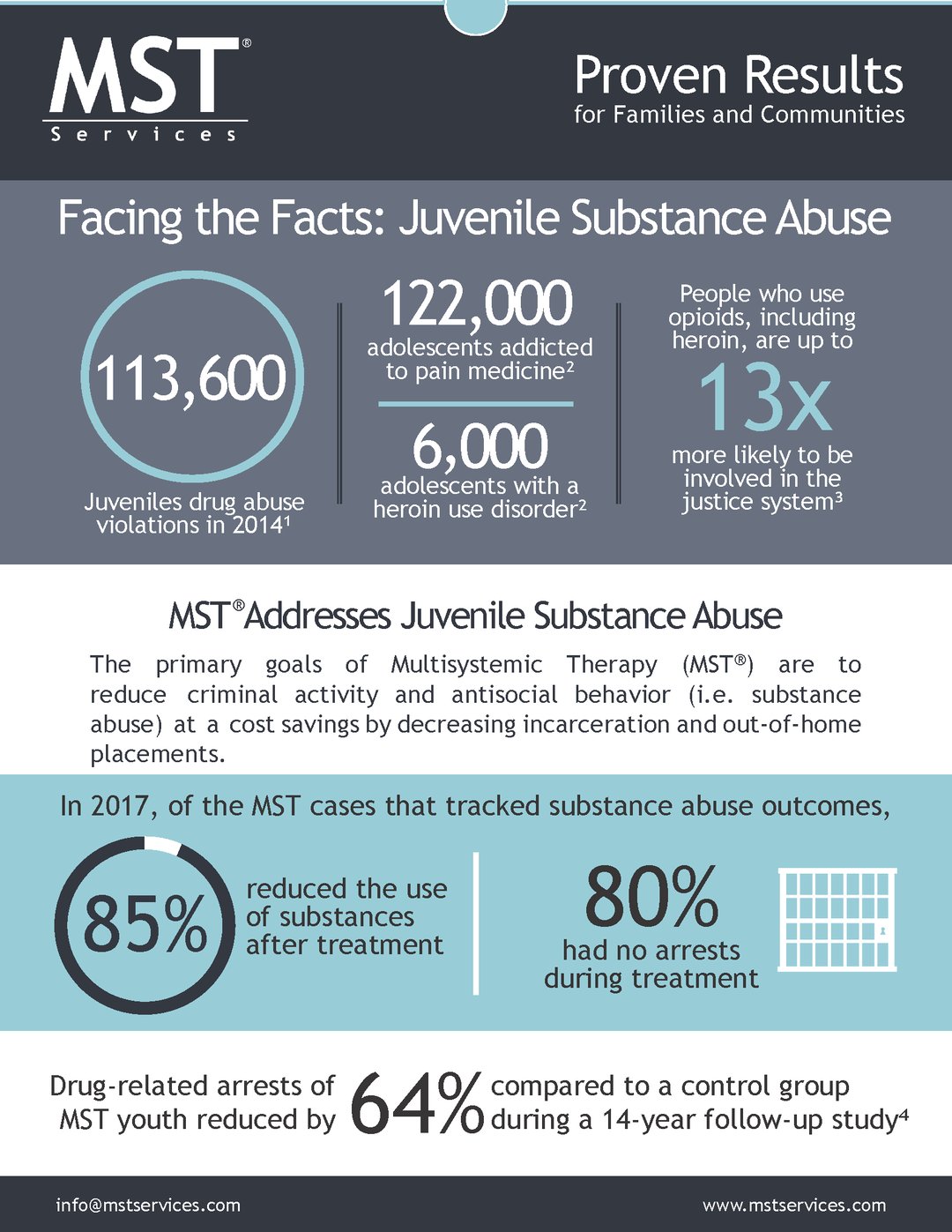
Juvenile Substance Abuse Fact Sheet

View this data snapshot that showcases the latest trends in youth substance abuse.

Ready to bring MST to your community?