
Intellectual Disabilities

teen-students-collaborating-on-project-in-classroom_

Evidence-Based Therapy for Youth With Intellectual and Developmental Disabilities

Multisystemic Therapy (MST) provides intensive, family- and community-based support for youth with intellectual and developmental disabilities who experience behavioral challenges. By partnering with caregivers and coordinating across home, school, and community settings, MST helps improve functioning, reduce problem behaviors, and strengthen long-term family stability.

MST offers a suite of evidence-based solutions that support substance abuse treatment and behavior change.

Multisystemic Therapy (MST®)

Multisystemic Therapy (MST®) is the core evidence-based model on which all MST adaptations are built. It supports child-serving systems by addressing serious behavioral challenges through intensive, family- and community-based intervention that reduces placements and strengthens caregiver capacity.

adult-male-tutor-helping-female-teen-wih-homework

MST–Intellectual Disabilities (MST-ID®)

MST-ID® is an adaptation of MST designed for youth with intellectual disabilities who experience serious behavioral challenges. Built on the MST framework, MST-ID tailors interventions to cognitive and adaptive needs while supporting caregivers (including those with intellectual disabilities), reducing crisis-driven services, and improving stability across home, school, and community settings.

male-instructor-teaching-teen-female-in-modern-shop-class

Positive Outcomes for Intellectual and Developmental Disability Populations

Reduced Behavioral Crises and Escalation

MST-ID and MST-ASD help reduce aggressive, disruptive, and unsafe behaviors by addressing underlying triggers across home, school, and community environments.

Improved Caregiver Skills and Confidence

Caregivers gain practical strategies to support communication, behavior regulation, and daily routines tailored to the youth’s developmental needs.

Increased Stability at Home and School

By coordinating supports across systems, MST helps youth remain safely in their homes and engaged in educational settings.

Reduced Reliance on Crisis and Institutional Services

Intensive, in-home intervention decreases emergency room visits, inpatient stays, and residential placements.

Stronger Family Functioning and Communication

Families develop clearer expectations, improved problem-solving skills, and more consistent routines that support long-term progress.

Lower Risk of System Involvement and Placement

MST-ID reduce costly system responses by stabilizing families and addressing challenges early and effectively.

Proven Results. Lasting Impact.

With over 90 studies and more than 140 peer-reviewed journal articles, Multisystemic Therapy features the largest body of evidence of successful interventions for high-risk youth.

Featured Resources

How to Become an MST Provider: A Comprehensive Guide

This guide will provide you with information on how to implement a successful program in your community.

MST-ID Overview Guide

Read this overview to learn how MST-ID supports families with intellectual disabilities, including program impact, outcomes, referral criteria, and case examples.

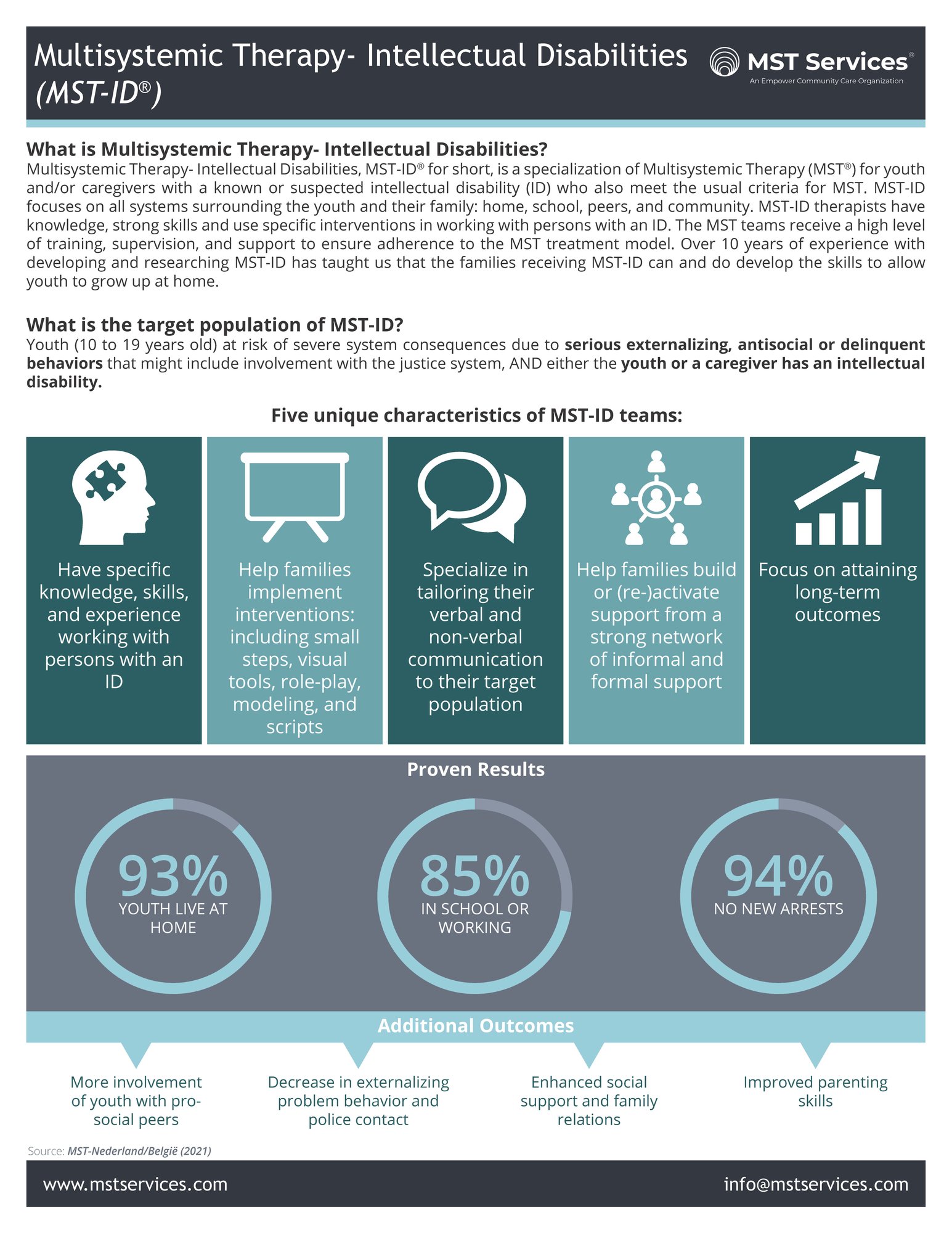
MST-ID Fact Sheet

Read this fact sheet for a quick overview of MST-ID, including who it serves, how it works, and key outcomes.

Ready to bring MST to your community?